Narihira Santoku Knife – sharpness for everyday cooking
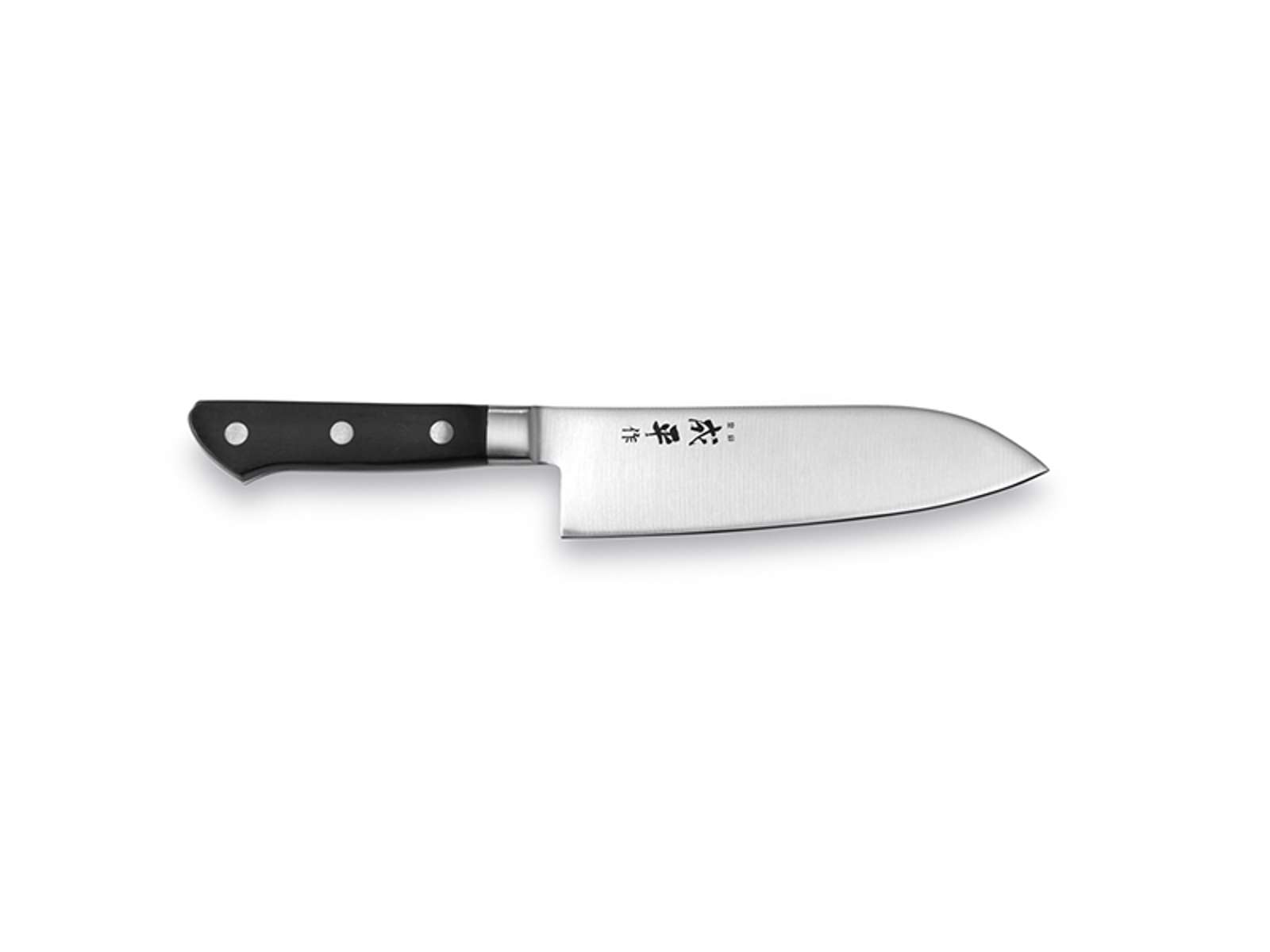
The Narihira Basis Santoku Knife with a 16.5 cm blade combines functionality and value in the kitchen. This Japanese knife is made from hard steel with a hardness of 59 HRC and features a practical black ECO handle. Weighing 275 grams, it sits comfortably in the hand and provides excellent control during cutting tasks.
Ideal for meat, fish, and vegetables alike, the santoku knife's versatile blade shape makes it an indispensable tool for everyday kitchen work.
An affordable quality knife with excellent cutting properties
The Narihira range is Tojiro's economy knife series, with production taking place in the East under quality control in Japan. This results in a sensible balance between price and quality. Although the steel is not quite as hard as in Tojiro's more expensive ranges, you get a knife with outstanding cutting performance at an attractive price. A particular advantage of this knife is that it is easier to maintain with an ordinary honing steel compared to harder Japanese knives.
Practical for daily kitchen work
The santoku knife is the Japanese equivalent of a chef's knife and is defined by its versatile usability. The 16.5 cm blade is ideal for precise cutting work, and the knife's balance makes it comfortable to use even during extended periods. The black ECO handle provides a secure grip, even with wet hands, which is essential for safety and precision in the kitchen. The knife is made from a single layer of steel, making it easy to maintain.
Caring for your Narihira knife
To preserve the knife's sharpness, use a honing steel regularly. Always wash the knife by hand immediately after use and dry it thoroughly. Avoid the dishwasher, as this damages both the edge and the handle. With proper care, this knife will be a faithful companion in the kitchen for many years to come. As the knife gradually dulls over time, it can be resharpened again and again.
The Narihira Santoku Knife gives you:
• A versatile Japanese knife design that handles meat, fish, and vegetables
• Hard steel with 59 HRC hardness, easier to maintain than harder Japanese knives
• An affordable quality solution with a good balance between price and functionality
You are always welcome to contact our customer service at web@hwl.dk for further information.
Frequently asked questions
How do I best maintain my Narihira knife?
Wash the knife by hand after use, dry it thoroughly, and regularly use a honing steel to keep the edge sharp. Avoid the dishwasher.
What is the difference between a santoku knife and an ordinary chef's knife?
The santoku knife typically has a slightly shorter and wider blade with a flat edge, making it particularly well suited to chopping, slicing, and dicing techniques.
AI has contributed to this text and we therefore reserve the right to correct any errors.

 Instagram
 facebook
 Youtube
 LinkedIn