SENJEN Santoku Knife with Walnut – Sharp Precision in the Kitchen
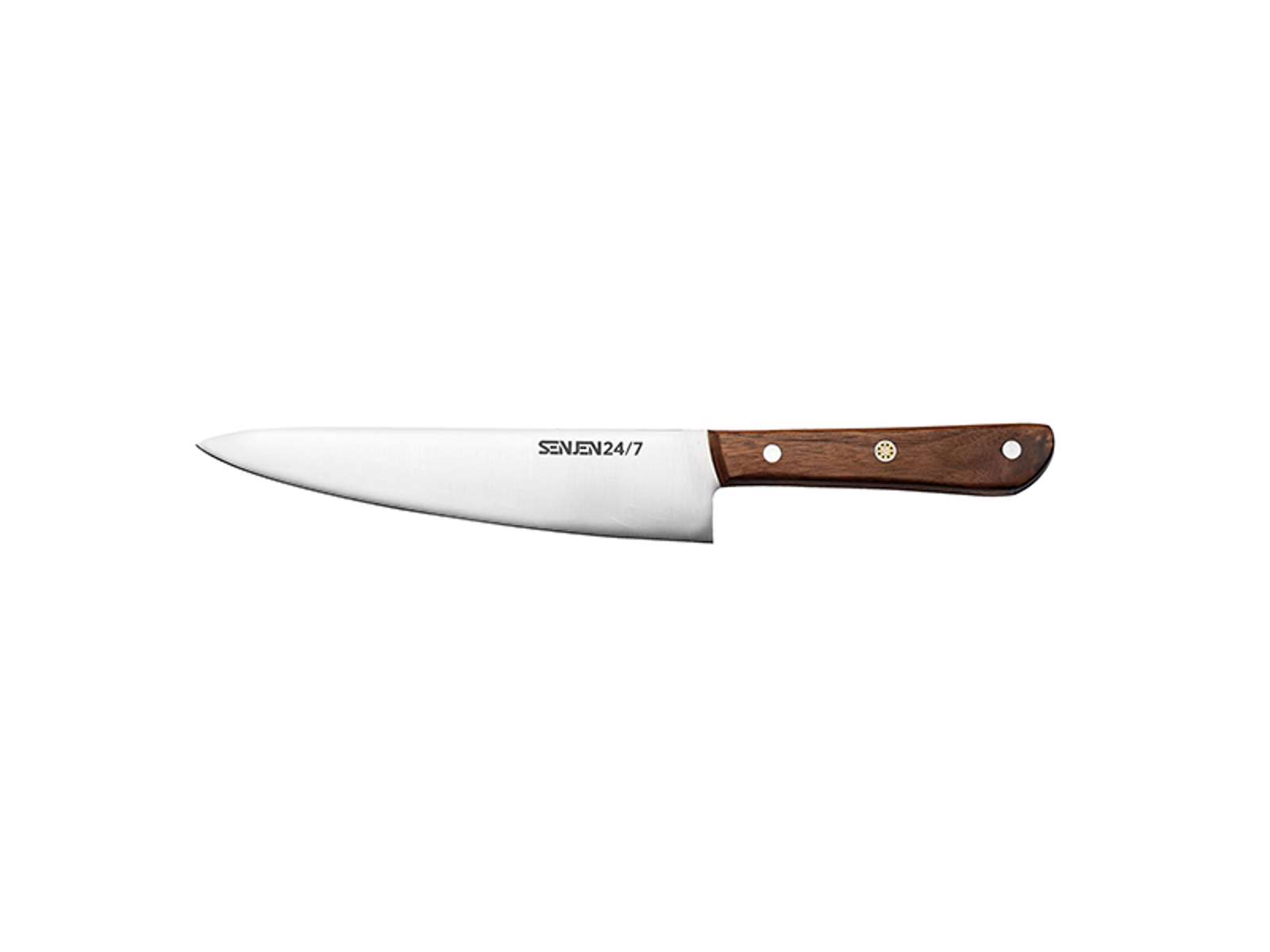
This santoku knife from SENJEN combines classic Japanese knife design with modern functionality. With a 180 mm blade in German sheet steel (1.4116) and a hardness of 55–57 HRC, the knife ensures precise cutting of meat, fish and vegetables alike. The elegant walnut handle provides a secure grip and adds a warm, natural character to the knife.
Ideal for finer cutting work where precision and control are paramount – perfect for both the home cook and the professional chef.
A versatile knife for everyday cooking
The santoku knife has a wider blade than traditional chef's knives, making it particularly well suited to slicing, chopping and dicing. The light weight of just 152 grams reduces strain on the wrist during extended use and makes the knife comfortable to work with even on demanding tasks. The German sheet steel ensures a good balance between cutting performance and durability, and is straightforward to maintain with a standard honing steel.
Quality you can feel in your hand
The walnut handle is not only beautiful to look at – it also provides a secure grip during use. Each handle is unique, with natural variations in the wood's colour and grain, making your knife a truly personal tool. The overall weight and balance have been carefully calibrated to give optimal control in use. The knife is handcrafted with close attention to detail, and the elegant ring rivet highlights its artisanal character.
Technical specifications
The santoku knife features a precise 180 mm blade made from German quality steel (1.4116) with a hardness of 55–57 HRC. It weighs just 152 grams, making it easy to manoeuvre. The knife has a single-layer steel blade that ensures good stability and precision when cutting. The walnut handle provides a comfortable grip and a natural counterbalance to the blade.
With this santoku knife you get:
- A versatile knife for precise cutting of meat, fish and vegetables
- A light weight (152 g) that reduces fatigue during extended use
- A natural walnut handle with a unique appearance and excellent grip
You are always welcome to contact our customer service at web@hwl.dk for further information.
Frequently asked questions
How do I maintain my santoku knife?
Rinse the knife in warm water after use, dry it thoroughly and store it in a dry place. Use a honing steel regularly to keep the edge sharp.
What is the difference between a santoku knife and a regular chef's knife?
A santoku knife typically has a wider blade and a flat edge without a tip, making it ideal for precise cutting and chopping techniques.
AI has contributed to this text and we therefore reserve the right to correct any errors.

 Instagram
 facebook
 Youtube
 LinkedIn