Japanese Santoku Knife Gai – Superior Precision in the Kitchen
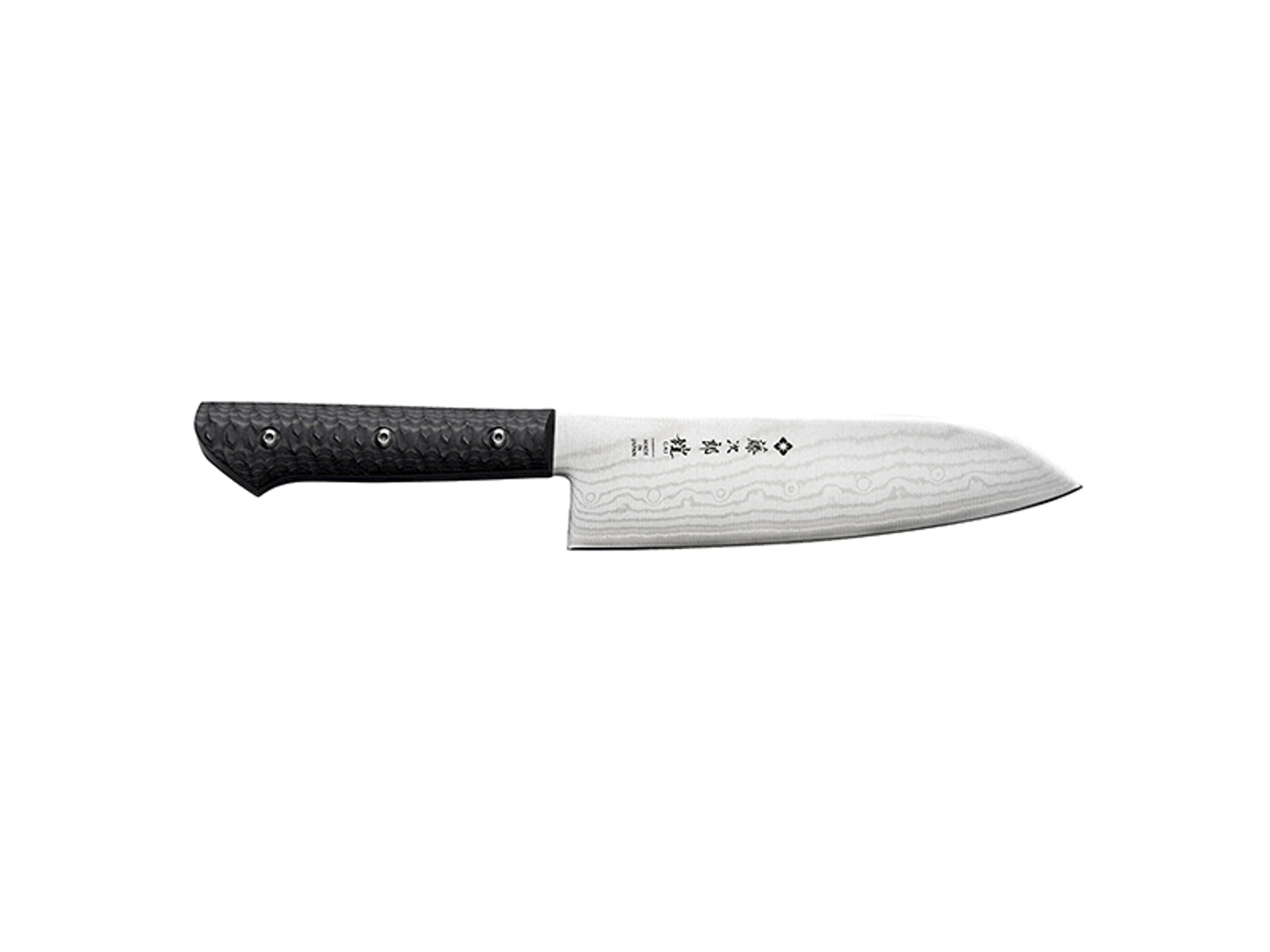
The Tojiro Gai Santoku knife with a 170 mm blade is a professional tool designed for precision work in the kitchen. Featuring a 37-layer damascus steel blade with a VG10 steel core, the knife combines durability and sharpness. The ergonomic handle provides perfect balance and secure handling for both routine and detailed tasks.
Ideal for chopping, slicing, and cutting vegetables, fruit, and smaller pieces of fish and meat – particularly well suited to onions thanks to the wide, stable blade.
Japanese Precision Tool for Everyday Cooking
The Santoku knife was developed specifically for the Japanese kitchen, where chopping plays a central role. The wide, slightly shorter blade makes the knife exceptionally stable during use. The gliding chopping motion that the Santoku is designed for makes it particularly suited to quick and uniform preparation of vegetables. Weighing just 175 g, it reduces wrist strain even during extended use.
Top-Class Durability and Performance
The name "Gai" means "armour" in Japanese – a reference to the knife's outstanding durability. The blade's core of high-quality VG10 steel ensures long-lasting sharpness, while the surrounding 37 layers of damascus steel reinforce the construction and give the knife its distinctive appearance. The handle has been carefully balanced to give the knife perfect equilibrium, resulting in greater control and less strain on the hand during use.
Technical Specifications
Blade length: 170 mm
Weight: 175 g
Material: 37-layer damascus steel with VG10 steel core
Series: Tojiro Gai
Please note that this knife requires proper maintenance: always hand wash (never dishwasher), dry immediately after use, and avoid contact with hard objects such as bones or hard surfaces. With the right care, the knife will retain its edge for a long time and can be re-sharpened repeatedly.
You are always welcome to contact our customer service at web@hwl.dk for further information.
Frequently Asked Questions
How do I maintain my Santoku knife?
Always wash the knife by hand with mild soapy water, dry it immediately after use, and store it protected. Avoid contact with hard surfaces and bones.
What is the difference between a Santoku knife and a standard chef's knife?
The Santoku knife typically has a wider, shorter blade and a flat edge, making it ideal for a chopping technique and precision work with vegetables.
AI has contributed to this text and we therefore reserve the right to correct any errors.

 Instagram
 facebook
 Youtube
 LinkedIn