
The santoku knife has become an indispensable tool in the modern kitchen — and for good reason. With its characteristic wide, lightweight blade, it excels at precisely cutting meat, fish, and vegetables, which is reflected in the name 'santoku', meaning 'three purposes'. At H. W. Larsen, we have carefully selected santoku knives that combine Japanese precision with ergonomic comfort, allowing you to elevate your cooking to new heights. Explore our versatile selection below.
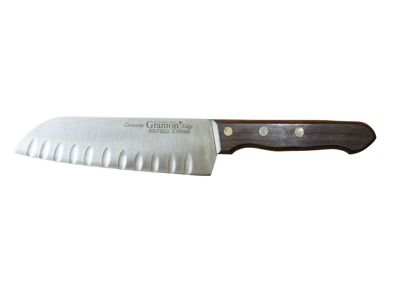
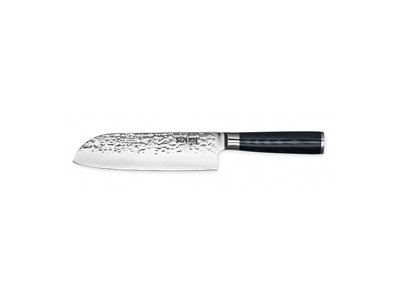
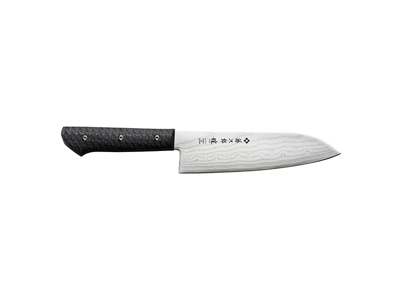
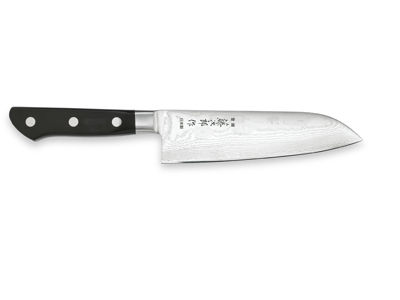
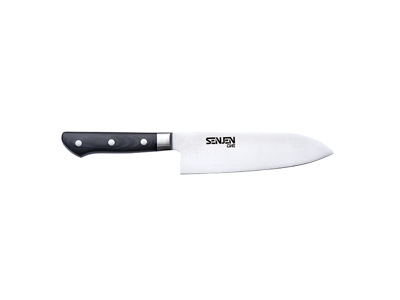
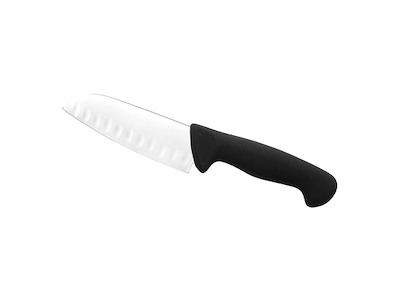
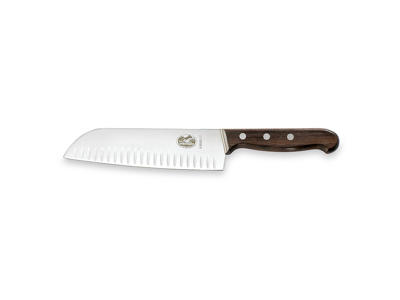
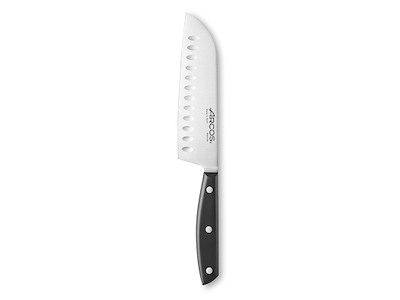
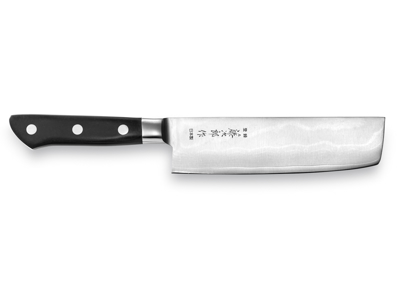
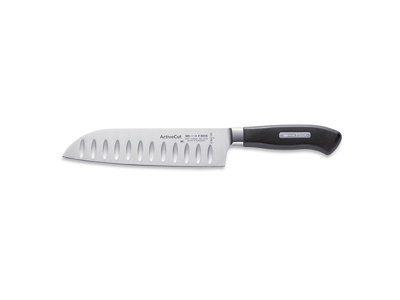
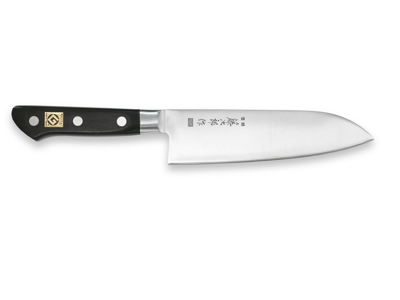
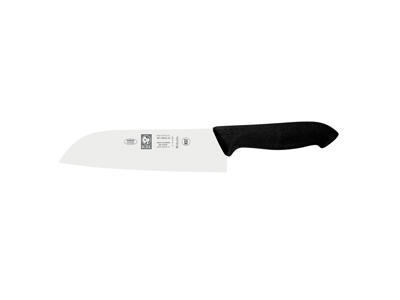
Santoku Knives - Japanese Precision in Your Professional Kitchen
Discover the rising popularity of the santoku knife - a versatile Japanese chef's knife that stands out in the professional kitchen. The name 'santoku' literally means 'three purposes', reflecting the knife's ability to handle meat, fish, and vegetables with exceptional precision. This versatile knife is ideal for both everyday routine tasks and detailed precision work, making it an essential tool in any kitchen with high demands for cutting precision and versatility.
The Unique Features and Design of the Santoku Knife
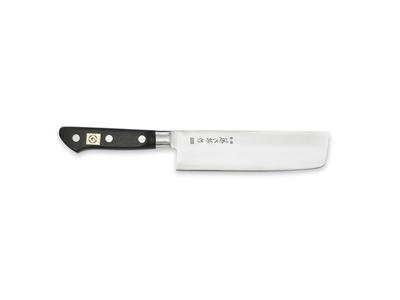
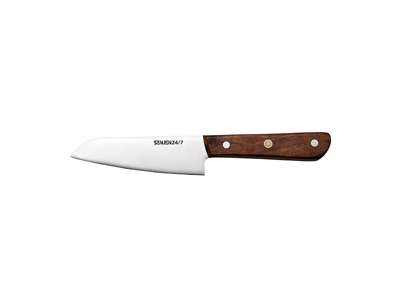
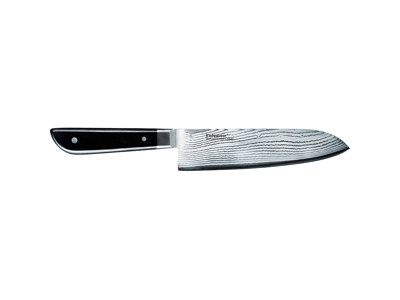
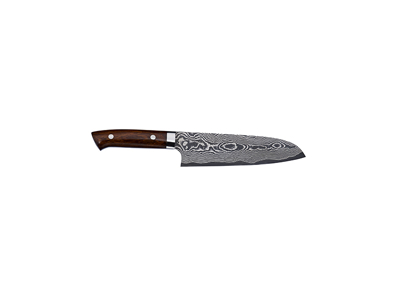
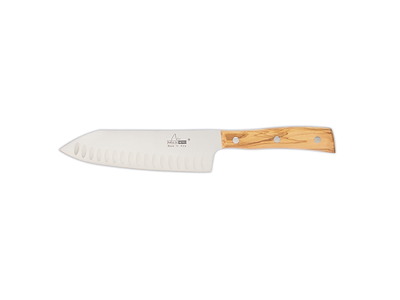
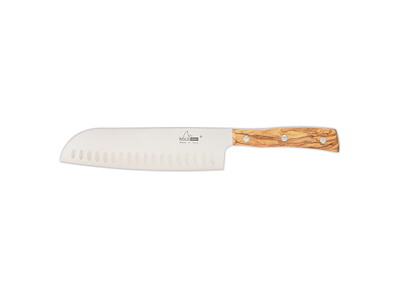
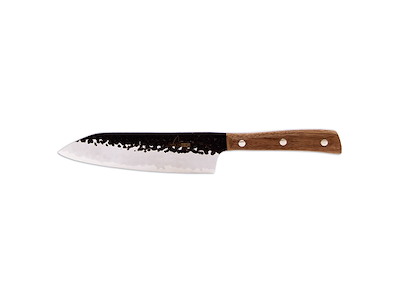
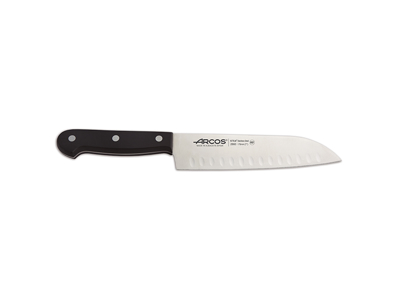
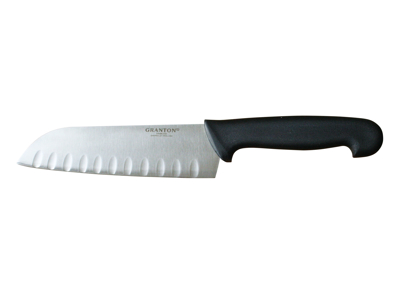
The santoku knife is characterized by its distinctive wide, lightweight blade and flat profile without the curved tip typical of Western chef's knives. This unique design is not accidental; it is carefully crafted to support Japanese cutting techniques that focus on precise, straight cuts rather than the rocking motion many are accustomed to.
The lightweight design combined with the wide blade makes the santoku knife ideal for handling both fine and more demanding kitchen tasks with minimal strain on the wrist. With its versatile nature, the knife effortlessly handles everything from quick chopping of onions to precise filleting of fish and slicing of meat, making it an indispensable aid in both professional and home kitchens.
Differences Between Santoku and Western Chef's Knives
There are significant differences between the Japanese santoku knife and Western chef's knives. While Western knives typically have a curved tip and symmetrically sharpened edge, the santoku knife features a thinner, wider blade with a flat profile. This particular construction supports Japanese cutting techniques that focus on precise, straight cuts rather than the rocking motion commonly used with Western knives.
The santoku knife's versatility shines especially when handling vegetables, where it excels in both precision and efficiency. It is particularly well-suited for quick chopping of onions, as the wide, stable blade provides optimal control. For professional chefs, this means increased speed in the kitchen with less strain on the wrist, while home cooks experience greater precision and safety in their daily cooking with this versatile knife.
Choosing and Maintaining Your Santoku Knife
When investing in a santoku knife, several important factors should be considered to ensure the best choice. The weight, balance, and ergonomics of the handle all play crucial roles in the knife's performance and comfort during use. A well-balanced design reduces hand fatigue during prolonged cooking, while an ergonomic handle provides precise control and safety even during the most demanding kitchen tasks.
Proper maintenance is essential to preserve the santoku knife's sharp edge and optimal performance. Regular sharpening with appropriate tools ensures that the knife remains sharp and effective. Hand washing is recommended over using a dishwasher, as it significantly extends the knife's lifespan. With the right care, your santoku knife will not only serve as a reliable tool in your kitchen but also become a valued investment that enhances your cooking experience and results year after year.
Take the next step in your culinary journey and explore our selection of santoku knives today. Experience the difference that professional chefs around the world have appreciated for generations. Make your investment now and transform your cooking. With our many years of experience in Japanese kitchen knives,
AI has assisted with the text, and therefore, errors are to be expected.
 Instagram
 facebook
 Youtube
 LinkedIn